
Key Takeaways (TL;DR)
Europe is not one market: the UK, Germany, France, and the Netherlands have different buyer behaviour, procurement cultures, compliance expectations, and competitive landscapes. A single outbound sequence dropped into all four rarely produces the same results.
Most outbound agencies are not EMEA specialists: many GTM agencies will take a European expansion brief but apply a US-built playbook without regional adaptation. The cost is usually a slow first six months while the messaging gets recalibrated.
Best for validated EMEA entry with shared-risk commercial model: K3C specialises exclusively in EMEA market entry and vertical expansion for B2B tech companies. Its three-phase framework validates ICP and messaging in the target market before scaling, and Phase 2 uses a success fee model that ties agency earnings to client pipeline outcomes.
What sets K3C apart: 26 years of EMEA launch experience across SaaS, FinTech, Climate Tech, and Cybersecurity, combined with LeanGTM.io — a proprietary signal-driven platform that identifies buying intent before outreach begins.
How to choose: if you are entering EMEA for the first time, prioritise firms with native regional operators and a validation-first model. If you already have a working GTM in your home market, look for an agency that can adapt and localise rather than rebuild from scratch.
Table of Contents
Top GTM Agencies for SaaS Expanding to Europe at a Glance
Why European SaaS Expansion Requires a Different GTM Approach
The EMEA GTM Challenges That Sink Expansion Budgets
Best GTM Agencies for European SaaS Expansion: In-Depth Review
How to Evaluate a GTM Agency for EMEA Expansion
FAQs About GTM Agencies for European Expansion
Top GTM Agencies for SaaS Expanding to Europe in 2026 at a Glance
| Agency | Best For | Key Features | EMEA Depth | Pricing |
|---|---|---|---|---|
| K3C | First EMEA entry; US companies expanding to Europe | LeanGTM™ platform, Phase 1 validation, shared-risk Phase 2 | Primary. 26 years | Fixed + retainer + success fee |
| Purple Path | SaaS building European partner and channel networks | European market entry, channel development | Strong EU focus | Project + retainer |
| The Marketing Practice | Enterprise B2B entering UK and Europe | ABM, demand gen, pipeline acceleration | UK + Europe | Custom; enterprise |
| LeadGem | Outbound-led European lead generation | Outbound prospecting, lead gen, multi-channel sequences | European coverage | Retainer-based |
| GTM Quest | Structured GTM strategy and sales process design | GTM strategy, ICP development, sales process | European coverage | Project + retainer |
| Growth Spree | Early-stage demand gen in European markets | Demand gen, content, paid, organic growth | European coverage | Retainer-based |
| Kalungi | Fractional CMO with European marketing capability | Fractional CMO, SaaS marketing playbook | Partial | Retainer; custom |
| The Growth Syndicate | Scale-ups running demand gen and ABM in Europe | ABM, demand gen, B2B campaigns | European operations | Retainer + project |
Why European SaaS Expansion Requires a Different GTM Approach
The most expensive assumption a B2B SaaS company can make when entering Europe is that what worked in its home market will transfer without modification.
European B2B buyers tend to be more risk-averse and procurement-process-led than their US counterparts. A pitch that emphasises disruption and speed may resonate in San Francisco and fall flat in Munich.
A UK enterprise buyer expects a different conversation about compliance than a Dutch scale-up. The decision-making structure at a German Mittelstand company is not the same as at a Silicon Valley Series B.
Beyond messaging, there are structural differences in how business is done. References from European clients carry more weight than US references. Local presence signals commitment. GDPR compliance is not a checkbox item; it is a gate.
There is also a newer dimension to European market entry that did not exist in the same form even a year ago: how AI research tools represent your company to a European buyer who has never spoken to your team. G2's 2026 research found 51% of B2B buyers now start vendor research inside an AI chatbot rather than a search engine, and a third of buyers ended up purchasing from a company they had not previously come across, because an AI tool surfaced it.
For a company entering a new European market with no existing brand recognition, this cuts both ways. It is a real opportunity to be discovered by buyers who would never have found you through a paid campaign, but only if your positioning, case studies, and market-specific proof points are structured clearly enough for an AI tool to summarise accurately.
The EMEA GTM Challenges That Sink Expansion Budgets
| Failure Mode | Why It Happens |
|---|---|
| Wrong ICP for the market | The ICP built from home-market data does not reflect how European buyers are structured. Job titles, buying authority, and trigger events differ. |
| Messaging that does not localise | Direct, benefit-forward US messaging often reads as too aggressive or unsubstantiated in European markets that value technical depth and peer references. |
| Hiring before validating | A local hire before the GTM motion is proven is an expensive way to find out your pitch does not land. The seniority required to build from scratch is significant and rare. |
| GDPR outreach compliance gaps | European outreach has specific consent and data handling requirements that differ materially from US cold outreach norms. Non-compliance creates legal and reputational risk. |
| No regional social proof | European buyers want to see that other European companies have bought and succeeded with your product. US case studies carry significantly less weight. |
| Treating AI search visibility as optional | 94% of B2B buyers now use AI tools during vendor research (Forrester, 2026), and AI answer engines have overtaken vendor websites as the top research source. A GTM agency or SaaS company with no structured presence in AI-generated answers is increasingly invisible at exactly the shortlisting stage that used to run through Google. |
| Volume tactics without signal intelligence | Generic high-volume outbound not timed to buying signals produces noise. European buyers do not respond well to spray-and-pray outreach. |
Best GTM Agencies for European SaaS Expansion: In-Depth Review
1. K3C

K3C is the most purpose-built EMEA market entry agency on this list. Unlike generalist GTM agencies that take European expansion briefs alongside domestic growth work, K3C's entire model is built around one problem: helping B2B tech companies enter new European markets and verticals faster and with less commercial risk.
The LeanGTM.io platform—a proprietary signal-driven intelligence tool—identifies buyer intent, monitors trigger events (funding rounds, leadership changes, technology adoptions), and powers every campaign. The three-phase framework addresses the specific failure modes of EMEA expansion in sequence: validate before scaling, align incentives with outcomes, then embed as a regional function.
How K3C Handles EMEA-Specific Challenges
Localised ICP and messaging: Phase 1 maps the specific buyer profile and trigger events for the target European market, not a copy-paste of the home-market ICP.
GDPR-compliant outreach: compliant data sourcing and outreach processes built into every campaign from the start.
Signal-timed outreach: LeanGTM.io identifies buying intent signals before outreach begins, so campaigns reach prospects when they have an active need, not on a random cadence.
Proven EMEA Results
Tributech (Austria, Industrial IoT Security): near-zero UK and Ireland engagement to 4-6 new business meetings per week. Learnings rolled out to broader international markets.
Treety (Climate Tech SaaS): 2-3 qualified meetings per day within week one; $500,000 in proposals by end of month one.
ChainComply (Compliance/KYC): validated messaging, secured senior compliance decision-makers, repeatable outbound engine with European market feedback.
Pros
26 years of EMEA market experience. More than any other agency on this list in this specific category
Proprietary LeanGTM.io platform provides signal-driven intelligence unavailable from agencies using generic tools
Shared-risk Phase 2 model aligns commercial incentives with client outcomes
No European hiring required. K3C provides the fractional regional function
Cons
Focused exclusively on EMEA; not the right partner for US domestic GTM
2. Purple Path
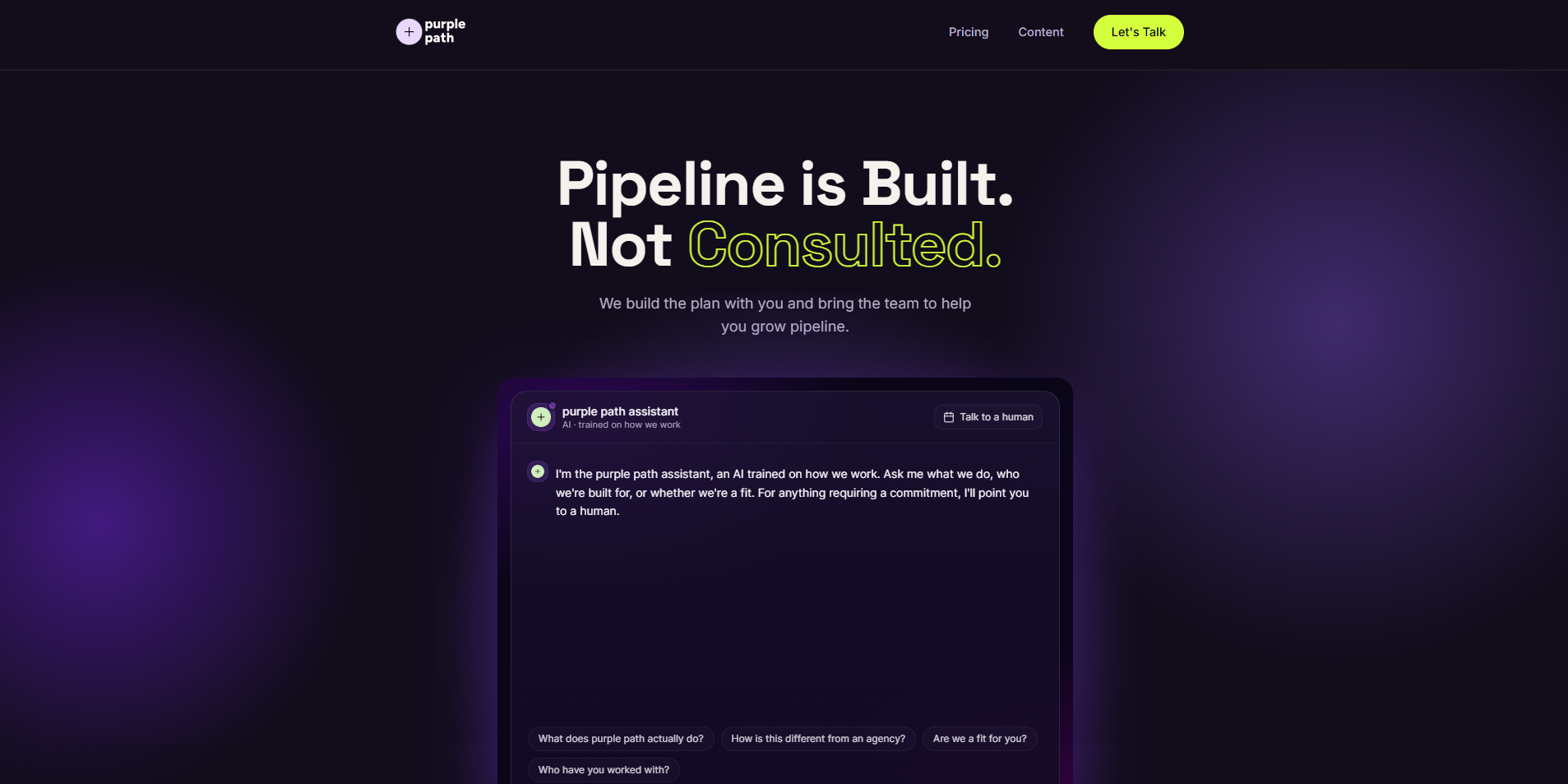
Purple Path is a European market entry agency with a specific focus on building partner and reseller networks in European markets. It is most useful for SaaS companies whose go-to-market motion at home is already channel-dependent companies that sell through VARs, resellers, or systems integrators and need to build the equivalent relationships in the UK or continental Europe without navigating those markets blind.
Pros
Specialist focus on European partner and reseller channel development
Relevant European market relationships and partner network rather than a US channel playbook, applied to unfamiliar European partners
Useful for SaaS companies with a channel-dependent GTM model that need to replicate that structure in European markets
Cons
Channel-specialist model. Does not cover direct outbound execution, ICP validation, or embedded fractional GTM leadership
Smaller firm with capacity constraints for large, simultaneous multi-market programmes across several European geographies at once
Not suited to pure direct sales motions; the channel-first orientation is a constraint for companies that primarily sell direct
Limited documented case study results, making it harder to evaluate the track record before engagement
3. The Marketing Practice
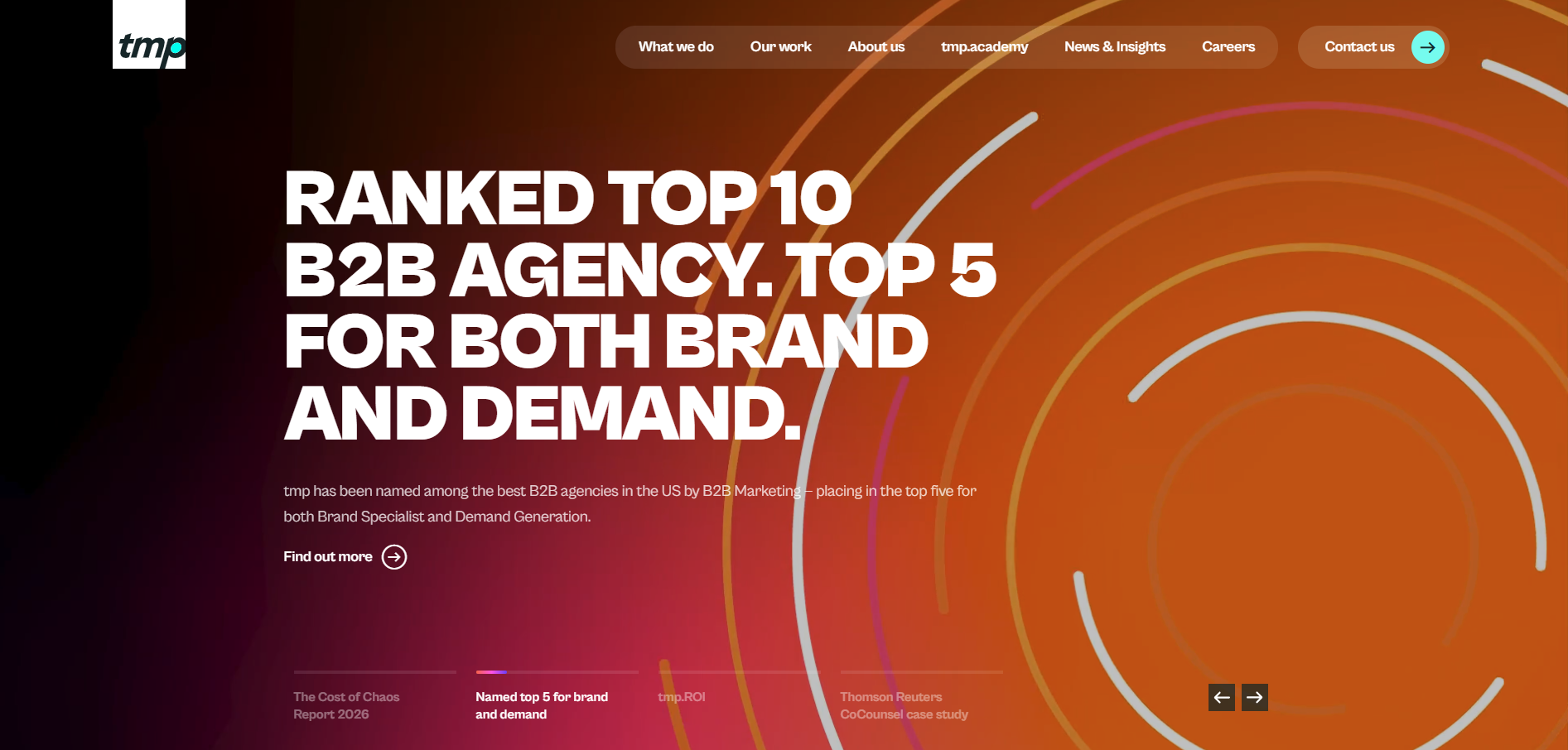
Founded in 2002 and headquartered in Oxfordshire with offices in London, Munich, and Seattle, The Marketing Practice is one of the most established full-service B2B marketing agencies in the UK and Europe. It serves large enterprise technology vendors running complex, multi-market campaigns with multi-stakeholder buying committees. Its European infrastructure makes it a credible choice for enterprise B2B technology companies that need scale, process, and multi-market coordination.
Pros
Over two decades of B2B marketing experience at enterprise technology scale, with genuine UK and European market operations across multiple office locations
Full-service capability spanning brand, demand generation, ABM, channel marketing, and digital experience for enterprise technology clients
Multi-market campaign coordination across UK, Germany, and other European markets from a single integrated team rather than separate country agencies
Cons
Enterprise pricing calibrated for companies with established marketing budgets running six-figure annual programmes. Not accessible for Seed or Series A startups entering Europe for the first time
Not a fit for ICP validation, outbound sales execution, or first-market-entry intelligence;
Campaign execution rather than market entry intelligence—the firm runs campaigns in European markets, but does not provide the buyer behaviour research and ICP localisation that precedes them
Onboarding timelines and minimum engagement scope can be a mismatch for early-stage companies that need to move fast
4. LeadGem
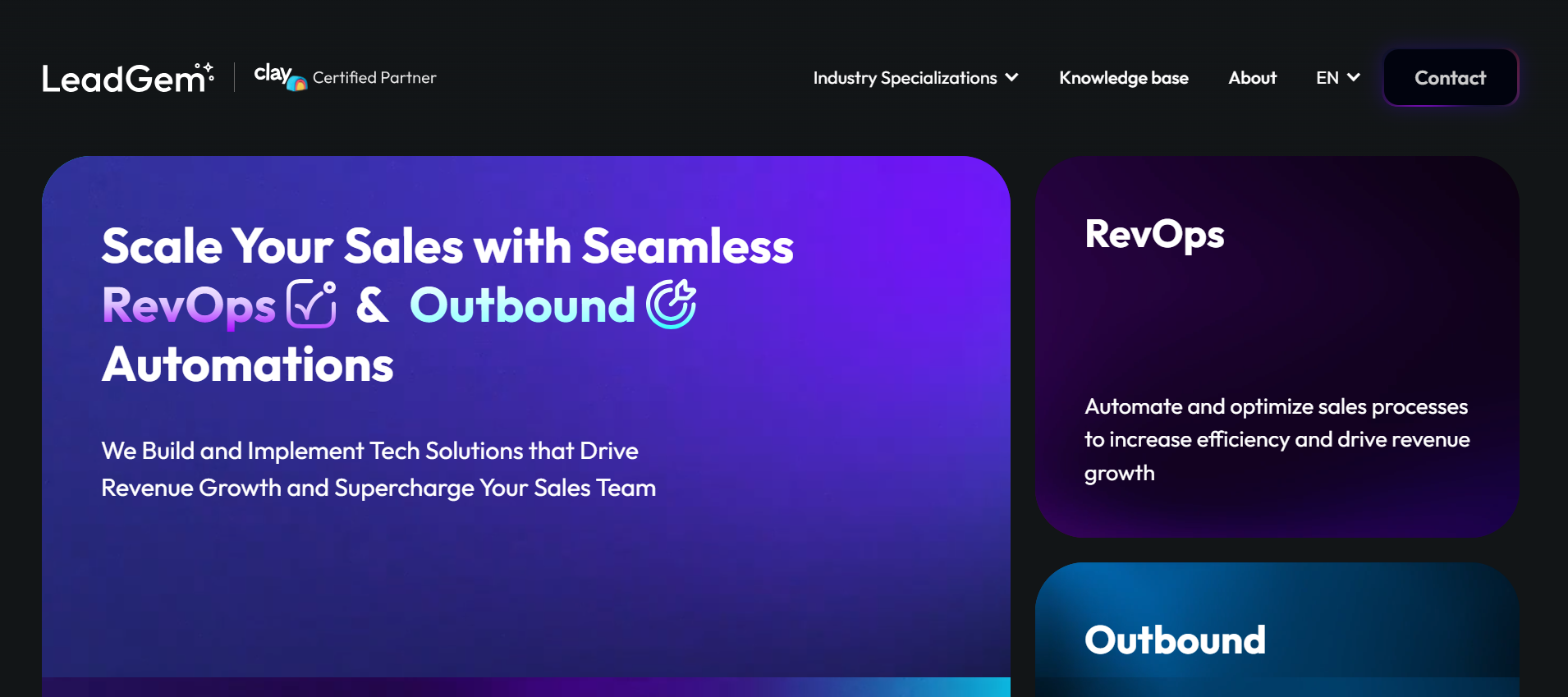
LeadGem provides B2B outbound prospecting and lead generation services for companies targeting European markets. The firm's model is deliberately straightforward: outbound campaign execution targeting European buyer profiles across email and LinkedIn, with list building, copy, and sequence management included. It is a practical choice for companies that already have a validated ICP and working messaging and need outbound execution capacity in European markets without building an in-house SDR team.
Pros
European-market outbound execution with list building, copywriting, and sequence management
Lower minimum commitment than full-stack GTM agencies, making it more accessible for earlier-stage teams with a defined scope
Practical entry point for companies that want to test outbound in a European market before committing to a larger expansion programme
Cons
Execution-only model—does not cover ICP validation, messaging development, EMEA localisation strategy, or GTM leadership
Results are heavily dependent on the quality of the ICP and messaging the client brings; LeadGem executes against existing assets rather than validating them
Less differentiated technology stack than agencies using proprietary signal intelligence or Clay Elite data enrichment
Limited track record, documentation and case study evidence compared to more established agencies in the EMEA outbound category
5. GTM Quest
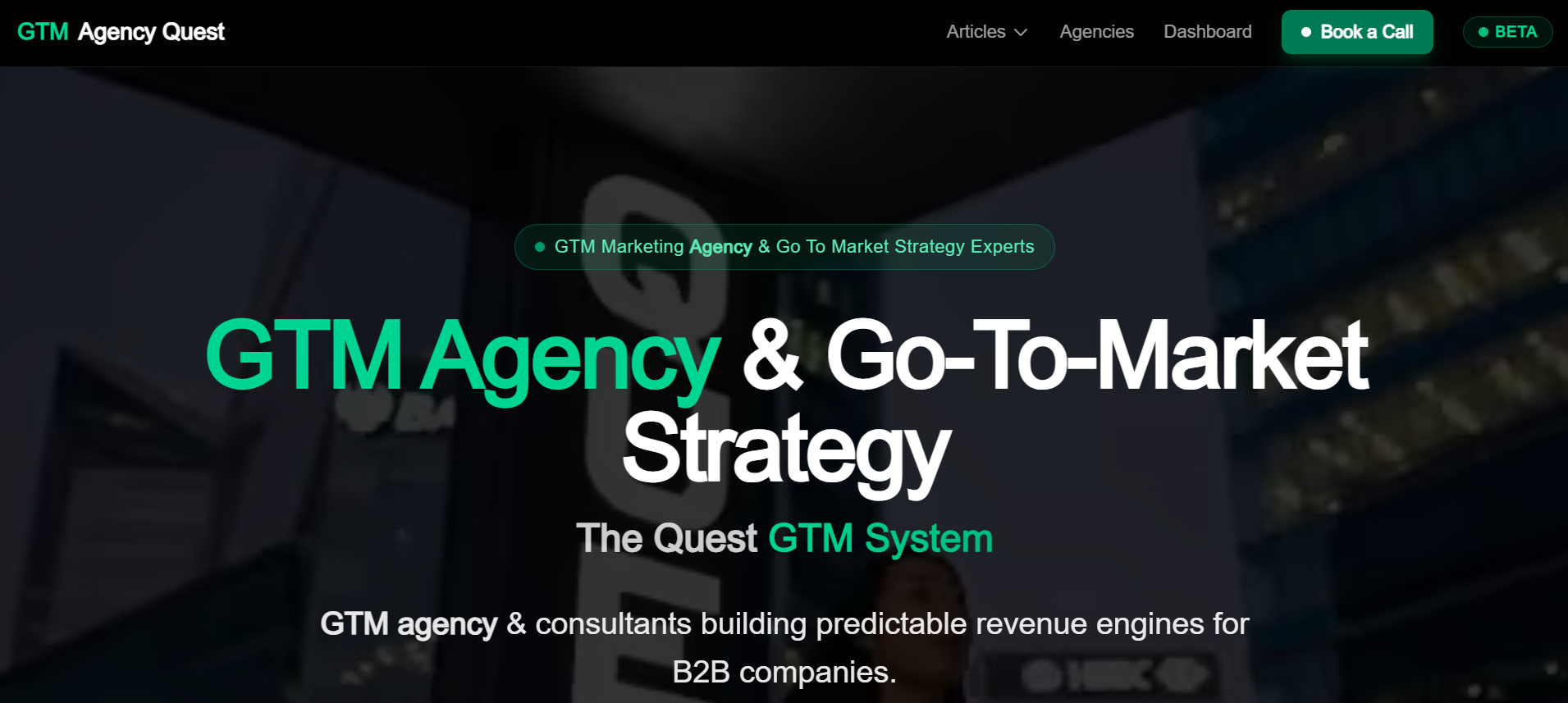
GTM Quest works with SaaS startups to build structured go-to-market strategies, covering ICP development, positioning, messaging, and sales process design. The firm's value is in the diagnostic and design phase of the GTM process, helping founders understand what the right GTM motion should look like before committing to execution at scale.
Pros
Structured approach to ICP development and GTM strategy design.
Useful at the pre-execution stage of a European expansion project when the buying committee, messaging, and outreach strategy for the new market need to be defined
Strategy deliverables are transferable—clients leave with frameworks and messaging assets they can brief execution partners with
Cons
Strategy-first model means the firm does not own outbound execution, pipeline generation, or ongoing commercial operations—clients need separate capacity for that
Less embedded in EMEA outbound operations or regional buyer behaviour intelligence than K3C's market entry model
Smaller profile and limited documented case study evidence make it harder to validate the track record independently before committing
6. Growth Spree
Growth Spree is a B2B SaaS marketing agency that has positioned itself around multi-channel demand generation for early-stage companies targeting European and global markets. The firm covers paid media, content marketing, SEO, LinkedIn outreach, and more recently GEO (generative engine optimisation), running integrated programmes rather than isolated channel campaigns.
Pros
Multi-channel demand generation coverage including paid search, paid social, content, SEO, and LinkedIn
Early-stage focus with engagement models calibrated for companies that cannot yet absorb enterprise agency pricing
Growing GEO capability to address how B2B buyers are using AI search tools to research vendors — relevant for companies focused on getting cited in AI-generated answers
Cons
Marketing-led model—direct outbound sales execution, ICP validation, and embedded GTM leadership are not part of the core service
Less EMEA market entry intelligence than K3C's localisation-first approach;
Results timelines for demand generation programmes (3-6 months to meaningful inbound pipeline) are longer than outbound-first validation sprints
7. Kalungi
Founded in 2018 in Seattle, Kalungi provides a full outsourced marketing function for B2B SaaS companies, including fractional CMO leadership paired with a full execution team running positioning, demand generation, SEO, content, and pipeline reporting under one engagement.
As a HubSpot Diamond Partner running on the T2D3 growth playbook, Kalungi is a strong choice for founders who need to stand up a complete marketing function without building an in-house team. Its primary market is the US, and its model is marketing-led rather than outbound-sales-execution-led, which means it is less suited to EMEA-specific market entry work where regional buyer behaviour, GDPR-compliant outreach, and native market intelligence are the primary requirements.
Pros
Full outsourced marketing function—fractional CMO leadership plus demand generation, SEO, content, and reporting
T2D3 playbook provides a structured, stage-appropriate growth framework with documented milestones
HubSpot Diamond Partner with deep marketing automation, CRM integration, and lifecycle tracking capability
Pay-for-performance element creates shared accountability beyond a flat monthly retainer
Cons
Primarily US-focused; limited native EMEA market entry capability, regional buyer behaviour intelligence, or GDPR-compliant outreach infrastructure
Marketing leadership model—outbound sales execution, pipeline generation through direct prospecting, and SDR operations are not part of the core service
Extended contract terms noted by some reviewers as less flexible than fast-moving early-stage teams require
Investment level is significant; better suited to companies with post-Seed funding and meaningful marketing budgets than pre-revenue or bootstrapped teams
8. The Growth Syndicate
The Growth Syndicate is a B2B growth agency covering demand generation, account-based marketing, and multi-channel campaign execution for funded startups and scale-ups with operations in European markets. It is a reasonable choice for companies that have already validated their ICP and core messaging and need campaign execution capacity across European markets, particularly where ABM and paid demand generation are the primary growth levers
Pros
Demand generation and ABM capability for companies running structured buyer engagement programmes across multiple European markets
Multi-channel execution covering paid media, content, and ABM without requiring the client to manage separate specialist agencies
Suitable for funded scale-ups with established GTM strategy and internal revenue leadership that need execution capacity
Cons
Campaign execution model—does not provide ICP validation, outbound sales operations, or fractional GTM leadership for companies still building the GTM foundation
Less suited to first-time EMEA entry where the ICP, messaging, and buyer behaviour in the target market have not yet been validated
No proprietary signal intelligence or technology layer; campaigns run on standard third-party tooling
How to Evaluate a GTM Agency for EMEA Expansion
| Question | What a Strong Answer Looks Like |
|---|---|
| Do you have native EMEA operators? | Agencies that apply US teams to European outreach without regional adaptation produce weaker results. Look for operators who have launched brands in the specific markets you are targeting. |
| How do you validate ICP for a new market? | The answer should involve market signal research, trigger event mapping, and messaging hypothesis testing before scaling spend. If the answer is 'we start with outbound', that is a risk signal. |
| Can you show EMEA-specific results? | Ask for specific metrics: meetings per week in European markets, pipeline built, ARR influenced. Not US work applied to European clients. |
| How do you handle GDPR compliance? | This should be answered specifically. GDPR-compliant outreach in Europe is operationally different from US cold outreach. |
| What does your commercial model look like? | Shared-risk models (success fee + retainer) align incentives better than flat retainer-only structures where the agency is paid the same regardless of pipeline generated. |
FAQs About GTM Agencies for European Expansion
Do I need a different GTM agency for Europe than I use for my home market?
Often yes. EMEA market entry is a distinct commercial discipline. European buyer behaviour, compliance requirements, messaging norms, and procurement cycles are different enough that a US-built playbook applied without modification typically produces poor results in the first six months. An agency that has spent decades launching B2B brands into European markets brings a pattern library that a generalist firm cannot replicate.
How long does it take to see results from a GTM agency in Europe?
With a validation-first approach, qualified meetings should begin appearing within weeks, not months. K3C's Tributech engagement moved to 4-6 new business meetings per week after market validation. The Treety engagement produced 2-3 qualified meetings per day within week one.
What is the biggest mistake companies make when entering European markets?
Hiring a local sales representative before the GTM motion is validated in the region. A local hire before messaging and ICP are confirmed in the target market is an expensive way to find out the pitch does not resonate with European buyers.
Which European markets should a SaaS company enter first?
For most B2B SaaS companies, the UK is the natural first EMEA market: shared language, mature technology buyer community, and more US-comparable sales cycles than continental Europe. The Nordics are often the second consideration. Germany is the largest single market but has longer procurement cycles and requires more localisation investment.
What does GDPR-compliant outreach actually mean in practice?
GDPR sets specific requirements around lawful basis for processing contact data, the right to object to marketing communications, data minimisation, and storage limitation. For B2B outreach in Europe, this means using legitimate interest as the lawful basis with a documented balancing test, including a clear unsubscribe mechanism in every sequence, and sourcing contact data from compliant providers.
Does AI search change how I should evaluate GTM agencies for European expansion?
Yes, in one specific way worth acting on. Because a growing share of buyers now research vendors through AI tools before ever visiting a website, the GTM agencies most likely to get seriously considered are the ones with clear, specific, publicly documented proof points, plus named client results, explicit pricing models, and stated regional expertise, rather than generic positioning.
This applies to evaluating agencies for your own expansion, and it applies to how your own company should be presenting itself once you're the one entering a new European market.
